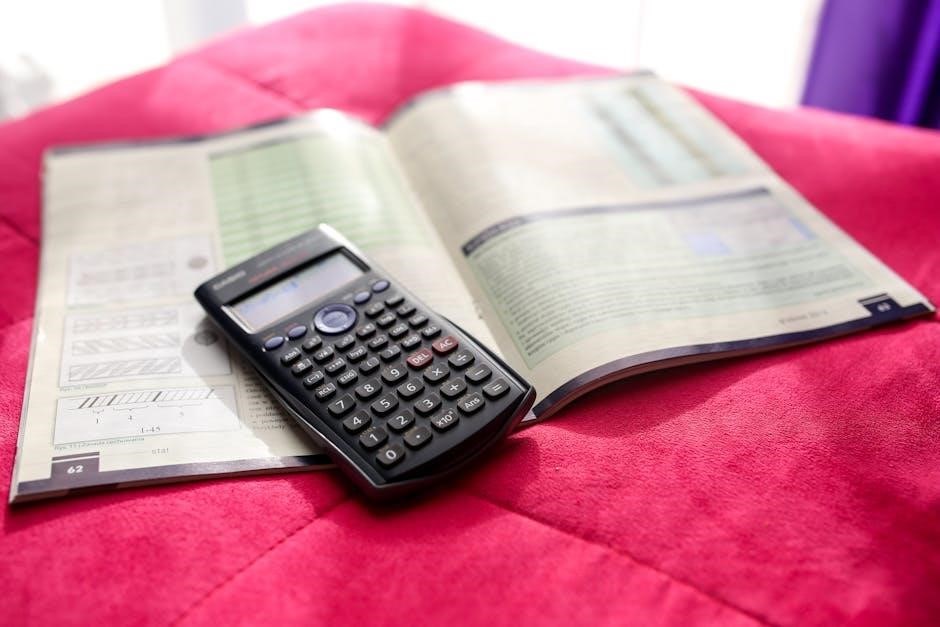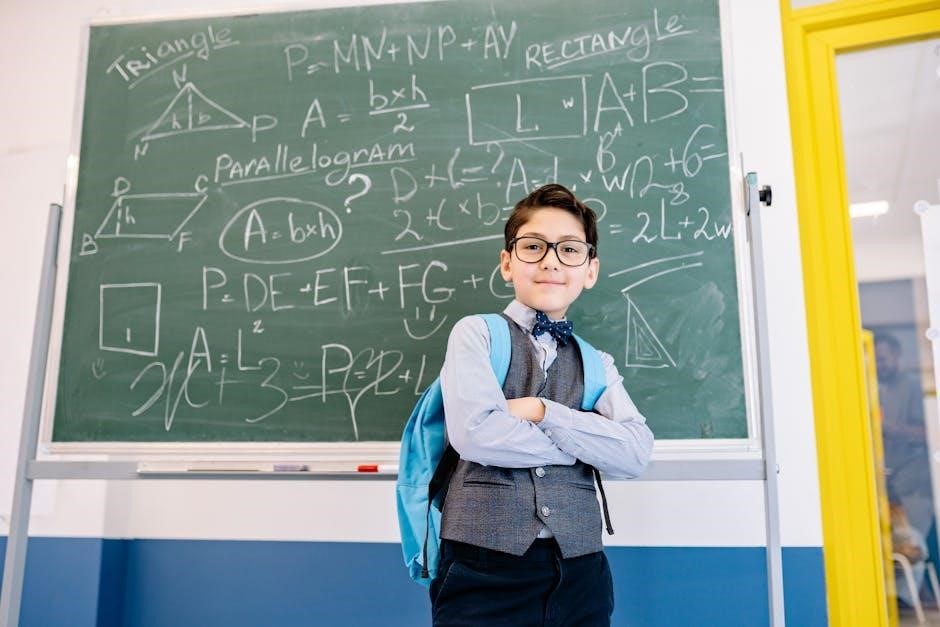
Gimkit, a classroom game show, sparks engagement with knowledge-based challenges; exploring maths riddles in PDF format offers accessible, offline practice and fun learning opportunities.
What are Maths Riddles?
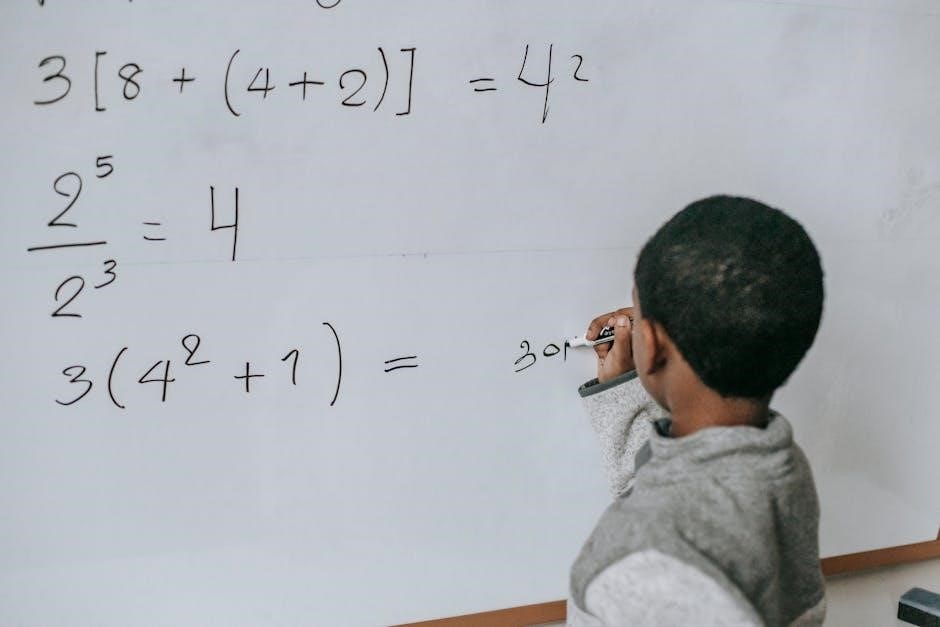
Maths riddles are engaging puzzles that require mathematical thinking and problem-solving skills to uncover the answer. Unlike standard equations, they often present challenges disguised within a narrative or word problem, demanding interpretation and logical deduction. These aren’t simply about recalling formulas; they test understanding and application of mathematical concepts.
Gimkit’s interactive platform demonstrates how gamification enhances learning, mirroring the playful nature of riddles. Finding maths riddles with answers in PDF format provides a convenient way to practice these skills independently. They range from simple arithmetic puzzles to complex algebraic or geometric problems, catering to various skill levels. Successfully solving them builds confidence and a deeper appreciation for mathematics.
Why Solve Maths Riddles?
Solving maths riddles cultivates critical thinking, enhances problem-solving abilities, and boosts mathematical fluency. They move beyond rote memorization, encouraging a deeper understanding of underlying principles. The challenge presented by a riddle fosters perseverance and a growth mindset, valuable skills applicable far beyond the classroom.
Similar to the engaging challenges found on platforms like Gimkit, riddles make learning enjoyable. Accessing maths riddles with answers in PDF format offers flexible, self-paced practice. This format allows for offline study and easy printing, supporting diverse learning preferences. Ultimately, tackling these puzzles strengthens logical reasoning and builds confidence in mathematical abilities.

Types of Maths Riddles Found in PDFs
PDF collections commonly feature arithmetic, algebraic, geometry, and logic-based puzzles, mirroring the diverse challenges found in educational games like Gimkit.
Arithmetic Riddles
Arithmetic riddles, frequently found within maths riddles with answers PDF resources, center around basic operations: addition, subtraction, multiplication, and division. These puzzles often present scenarios requiring calculations to determine a final value. For example, a PDF might pose a word problem involving quantities and costs, demanding the solver to apply arithmetic skills to find the solution.
These riddles are foundational, building number sense and computational fluency. They often appear in primary and middle school level PDFs, aligning with early mathematical concepts. Similar to the quick-thinking required in a Gimkit game, arithmetic riddles necessitate rapid recall of facts and efficient problem-solving. The PDF format allows for self-paced practice and repeated attempts, reinforcing understanding. Solutions are typically included, enabling learners to verify their work and identify areas for improvement.
Algebraic Riddles

Algebraic riddles within maths riddles with answers PDF collections introduce variables and equations, demanding a more abstract approach than simple arithmetic. These puzzles often involve finding unknown values represented by letters, requiring learners to apply algebraic principles to isolate and solve for those variables. A PDF might present a scenario where a relationship between quantities is expressed algebraically, challenging the solver to decipher the equation.
These riddles are common in middle and high school PDFs, building upon foundational arithmetic skills. Like strategically navigating a Gimkit challenge, solving algebraic riddles requires logical reasoning and a systematic approach. The PDF format provides a convenient way to practice manipulating equations and verifying solutions. Detailed answer keys are crucial for self-assessment and understanding the steps involved in solving each riddle.
Geometry Riddles
Geometry riddles found in maths riddles with answers PDFs test spatial reasoning and understanding of shapes, sizes, and angles. These puzzles often present visual scenarios requiring calculations of area, perimeter, volume, or relationships between geometric figures. A PDF might depict a complex shape divided into smaller parts, challenging the solver to determine missing dimensions or angles, much like strategizing in a Gimkit game.
Typically appearing in middle and high school level PDFs, these riddles build upon foundational geometric concepts. Successfully tackling them demands visualizing shapes and applying relevant formulas. The PDF format allows for easy reference to diagrams and step-by-step solutions. Comprehensive answer keys are essential for verifying calculations and grasping the underlying geometric principles, fostering a deeper understanding.
Logic-Based Maths Riddles
Logic-based maths riddles within maths riddles with answers PDFs emphasize deductive reasoning and problem-solving skills, mirroring the strategic thinking required in a Gimkit game. These aren’t solely about calculations; they present scenarios demanding logical interpretation and pattern recognition. A PDF might contain a series of clues or statements, requiring solvers to deduce numerical values or relationships.
Often found across all difficulty levels, these riddles challenge assumptions and encourage systematic thinking. They frequently involve constraints or conditions that must be satisfied, demanding careful analysis. The PDF format provides a convenient space for outlining possibilities and tracking progress. Detailed solutions are crucial for understanding the logical steps involved, enhancing critical thinking abilities and analytical prowess.
Where to Find Maths Riddles with Answers in PDF Format
Gimkit’s resources, educational websites, and puzzle books (in PDF versions) are excellent sources for maths riddles; schools also frequently offer these materials.
Online Educational Websites
Numerous websites specialize in providing educational resources, including a wealth of maths riddles available in PDF format. These platforms often categorize riddles by difficulty level, making it easy to find appropriate challenges for students of all ages and skill levels. Many sites offer answer keys alongside the riddles, facilitating self-assessment and independent learning.
Gimkit, while primarily a game-based learning platform, can direct users to supplementary materials and resources. Beyond Gimkit, dedicated maths puzzle websites frequently compile collections of riddles, often allowing users to download them as PDFs for convenient offline access. These resources are invaluable for teachers seeking engaging classroom activities or for students looking to enhance their problem-solving abilities outside of school. Regularly updated content ensures a continuous stream of fresh and stimulating challenges.
Maths Puzzle Books (PDF Versions)
Traditional maths puzzle books are readily available in digital PDF versions, offering a curated collection of riddles and problems. These PDFs often provide a structured learning experience, progressing from simpler to more complex challenges. Many publishers now offer digital editions alongside physical copies, increasing accessibility and convenience.
Searching online bookstores and educational resource sites reveals a vast selection of maths riddle books in PDF format. Similar to online websites, these books frequently include answer keys for self-checking. While Gimkit focuses on interactive gameplay, these PDF books provide a more focused, individual learning experience. Downloading a PDF allows for offline study and printing, making them ideal for travel or situations without internet access. They represent a cost-effective way to access a large number of puzzles.
School/Educational Institution Resources
Many schools and educational institutions create or curate collections of maths riddles, often distributing them as PDF documents to students. These resources are typically aligned with the curriculum, reinforcing classroom learning in an engaging way. Teachers may develop custom PDFs with problems tailored to specific learning objectives, providing targeted practice.
Access to these PDFs often requires enrollment or affiliation with the institution. While not as broadly available as online resources or published books, they offer a valuable supplement to traditional instruction. Similar to platforms like Gimkit, they aim to foster a positive attitude towards maths. Check school websites, learning management systems, or directly inquire with maths teachers about available PDF riddle collections. These resources frequently include detailed solutions for self-assessment.

Difficulty Levels of Maths Riddles
Maths riddles in PDF format span a wide range of complexities, from simple primary school problems to challenging high school and college-level puzzles.
Easy Riddles (Primary School Level)
Maths riddles designed for primary school students, often found within PDF resources, focus on foundational arithmetic skills. These typically involve simple addition, subtraction, multiplication, and division problems presented in a playful, story-based format.
Expect questions like “I have 5 apples, and I eat 2. How many apples do I have left?” or visual puzzles involving counting objects. The goal is to build confidence and reinforce basic number sense. PDFs are excellent for providing repeated practice.
These riddles frequently utilize relatable scenarios, making the learning process more engaging for young learners. Answers are usually straightforward, encouraging independent problem-solving and a positive attitude towards mathematics. Gimkit-style engagement can be mirrored with these foundational challenges.
Medium Riddles (Middle School Level)
Maths riddles geared towards middle school students, commonly available in PDF format, introduce more complex concepts. These often involve multi-step arithmetic, basic algebra, and introductory geometry. Expect problems requiring students to apply multiple operations to reach a solution.
Riddles might present scenarios like calculating areas and perimeters, solving for unknown variables in simple equations, or interpreting data from charts and graphs. PDF resources allow for focused practice on specific skills.
These challenges encourage critical thinking and problem-solving abilities, building upon the foundational skills learned in primary school. Like Gimkit challenges, they demand strategic application of knowledge. Answers require more detailed calculations and logical reasoning.
Hard Riddles (High School/College Level)
Maths riddles designed for high school and college students, often found in PDF collections, delve into advanced mathematical territories. These frequently incorporate calculus, trigonometry, complex algebra, and sophisticated geometric principles. Solving them demands a robust understanding of mathematical theory and strong analytical skills.
Expect problems involving proofs, function analysis, and intricate equation solving. PDF formats provide a convenient way to access and work through these challenging problems. Similar to the strategic thinking needed in a game like Gimkit, these riddles require innovative approaches.
Answers aren’t always straightforward, often requiring multiple steps and a deep grasp of underlying concepts. They are excellent for honing problem-solving abilities and preparing for advanced studies.

Benefits of Using PDF Format
PDFs offer convenient access to maths riddles, mirroring Gimkit’s accessibility; they’re portable, printable, and allow offline study, enhancing learning anytime, anywhere.
Portability and Accessibility
Maths riddles in PDF format excel in portability, mirroring the ease of access found on platforms like Gimkit. These documents can be effortlessly transported across devices – smartphones, tablets, laptops – ensuring learning isn’t confined to a single location. This accessibility is invaluable for students needing practice during commutes or breaks. PDFs maintain consistent formatting regardless of the operating system or device used, eliminating display issues. Sharing PDFs is also remarkably simple; they can be emailed, uploaded to cloud storage, or transferred via USB drives, fostering collaborative learning and quick distribution of challenging problems. This widespread compatibility makes maths riddles readily available to a broader audience, promoting inclusive educational opportunities.
Offline Access
A significant advantage of maths riddles presented in PDF format is the ability to access them offline, a feature mirroring the self-contained nature of Gimkit kits. Unlike online platforms requiring a constant internet connection, PDFs are self-contained files. This is particularly beneficial for students in areas with limited or unreliable internet access, or during travel where connectivity is unavailable. Offline access ensures uninterrupted learning and practice, allowing students to reinforce their understanding anytime, anywhere; Downloading a collection of maths riddles as PDFs creates a readily available resource, fostering independent study and problem-solving skills without dependency on external networks.
Printable Format
Maths riddles in PDF format offer the convenience of being easily printable, a tangible learning experience akin to utilizing physical Gimkit resources. This allows for screen-free practice, which can be beneficial for students who prefer a more traditional learning style. Printable PDFs are ideal for classroom activities, homework assignments, or simply for focused practice away from digital distractions. Teachers can easily distribute copies to students, and students can annotate directly on the printed pages, enhancing engagement and understanding. The ability to print also facilitates collaborative problem-solving, allowing groups to work together on riddles without needing multiple devices.
Tips for Solving Maths Riddles
Gimkit’s challenges demand careful reading; identify key words and break down complex problems – essential skills for mastering maths riddles found in PDF formats.
Read Carefully and Understand the Question
Successfully tackling maths riddles, especially those found in PDF formats, hinges on a thorough understanding of the question itself. Much like Gimkit’s game show format requires attentive participation, riddles demand careful reading – not skimming! Pay close attention to every detail, including units, specific wording, and any hidden constraints.
Misinterpreting a single word can lead to an incorrect solution. Before attempting to solve, rephrase the question in your own words to confirm comprehension. Ensure you grasp exactly what is being asked, and what information is provided. This foundational step, mirroring the strategic thinking needed in Gimkit, is crucial for efficient and accurate problem-solving. Don’t rush; clarity is key!
Look for Keywords and Clues
When navigating maths riddles within PDF documents, actively seek out keywords and subtle clues. Similar to how Gimkit challenges require recognizing patterns, riddles often embed hints within the phrasing. Words like “total,” “difference,” “product,” or “ratio” signal specific mathematical operations.
Pay attention to any numerical information provided, even if it seems irrelevant at first glance. Consider units of measurement – are they consistent? Look for relationships between different pieces of information. These clues act as stepping stones towards the solution. Identifying these elements, much like strategic gameplay in Gimkit, unlocks the path to successfully solving the riddle.
Break Down Complex Problems
Many maths riddles found in PDF formats present complex scenarios. Don’t be intimidated! Approach them like building a Gimkit kit – start with smaller, manageable components. Deconstruct the problem into individual steps. Identify the knowns and unknowns, and determine what exactly the riddle is asking you to find.
If the riddle involves multiple operations, tackle them one at a time, showing your work clearly. Visual aids, like diagrams or charts, can be incredibly helpful. This methodical approach, mirroring the strategic thinking needed in Gimkit, transforms a daunting challenge into a series of solvable parts, ultimately leading to the correct answer.

Popular Maths Riddle Themes
PDF maths riddles frequently explore number sequences, intriguing age problems, and cleverly disguised word problems – mirroring Gimkit’s diverse challenges.
Number Sequences
Number sequences are a cornerstone of many maths riddles found in PDF formats, demanding pattern recognition and logical deduction. These riddles often present a series of numbers, challenging solvers to identify the underlying rule – whether it’s addition, subtraction, multiplication, division, or a more complex mathematical relationship.
PDF collections frequently include sequences that escalate in difficulty, starting with simple arithmetic progressions and progressing to Fibonacci sequences or geometric progressions. Successfully solving these requires careful observation and the ability to extrapolate the pattern to determine the missing number. Like the strategic thinking needed in Gimkit, these riddles encourage analytical skills and problem-solving prowess. Mastering number sequences builds a strong foundation for more advanced mathematical concepts.
Age Problems
Age problems represent a classic category within maths riddles commonly found in PDF puzzle collections. These riddles typically involve determining the current or past/future ages of individuals based on given relationships and timeframes. They require translating word problems into algebraic equations, often involving variables representing ages.
Successfully tackling these challenges demands careful reading and the ability to define variables accurately. Like the quick thinking required in a Gimkit game, age problems necessitate logical reasoning and a systematic approach to problem-solving. PDF resources often provide step-by-step solutions, aiding in understanding the process. Mastering age problems strengthens algebraic skills and enhances the ability to interpret real-world scenarios mathematically.
Word Problems with Hidden Maths
Word problems with hidden maths are a staple in maths riddles available as PDF downloads, demanding more than just calculation. These puzzles disguise mathematical concepts within narrative scenarios, requiring readers to identify the relevant information and translate it into equations. Similar to the strategic thinking in Gimkit, deciphering these riddles involves careful analysis and problem decomposition.
Often, extraneous details are included to mislead, testing a solver’s ability to discern crucial data. PDF solutions frequently demonstrate how to extract the mathematical core from the surrounding text. Successfully navigating these challenges builds critical thinking skills and reinforces the application of mathematical principles to everyday situations, enhancing problem-solving prowess.